

Once I found this quote… ‘The way you learn is the way you approach life in general. It is also the way you solve problems, make decisions, and meet life’s challenges.’ It adds that learning happens in any setting and goes on throughout life, and that the experiential learning process supports good things like getting better at how we perform, and learn and keep developing. This was the source: https://experientiallearninginstitute.org/resources/what-is-experiential-learning/
I like this bit:
‘The way you learn is the way you approach life in general.’
What are the ways you choose to learn? My father taught me to try everything, like all the time, in many ways. He’d make a little game out of things that were at hand if we were waiting, say, at a restaurant or an airport or for a train. that’s another thing, we moved around quite a lot through the world starting from the very start, for me. Crossing cultures, making new starts, and trying stuff. These were the foundation blocks for me, for how to take an interest in what’s outside of right in front of me, and go outside the lines to look, observe, and discover.
Discovery design is what I really like to talk about but I know it’s very, very esoteric sounding.
This (below) is me making zines in HCM, this was one of the covers (it’s a spread, so the writing was on the back, yeah, the cover all blank and image-y, which at that time I thought was cool. I also thought S P A C E was a cool name until Art & Copy was the new one and everyone instantly got it and I was like, Oh.) This was HCMC, while it was still relatively 0pen, during the early part of the pandemic.

But yeah. Let me add more stuff here about the value of discovery for learning, and design.
When you go and learn things by the method of ‘discovery’, and you luck into cool things and people and conversations, so much richness is there.
Complexity, the being-here-now vibe that is the stuff of this region. Wuwei was something I learned (somewhat) by osmosis, in lockdowns in Saigon and Dalat and what are you gonna do. It’s possible to steer your ship without really doing a whole lot of steering, to be honest. Something that the achievement-oriented culture I grew up in simply won’t ever make room for. But that is the discovery part.

Letting things take you where they will.
Wayfaring, but more than that. Intentionally not trying too hard to control. Even if it’s very hard not to try to pin it all down before you invest too much sometimes it is a shot in the foot. Because that — rigidity — will put you in a box. I don’t mean the box underground kind, I mean the kind where you only see what’s right in front of you. It’s the end of learning, for my way, I guess, because it’s too short-sighted and near and the small crack of light is so inviting, so encouraging, for me to want to go and see. This philosophy brought DK to Asia in 2013, didn’t mean to live here this long.
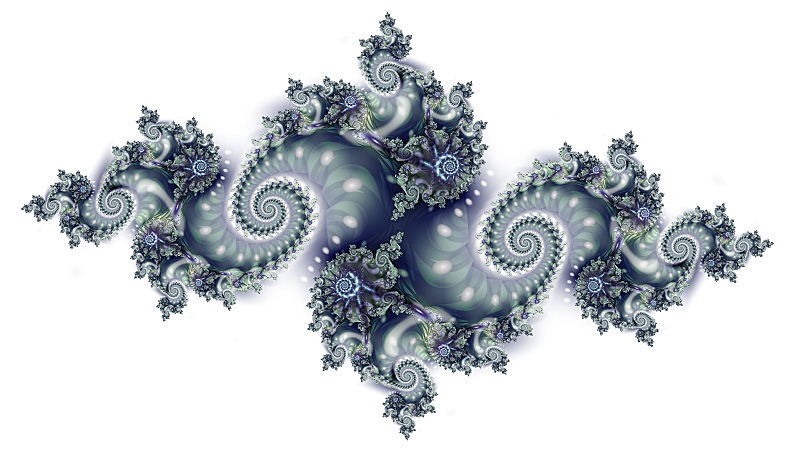
The Julia Set, pictured, was something I learned about in a class called Factals & Chaos, in high school. Patterns and styles and symmetries in it remind me of what I find so mesmerizing here in Cambodia. Rhthym, and pattern and orderliness. Even when there’s no real order, there actually kinda is.
- Popular on this website is this post on Khmer Design
- Ask me about my books from Viet Nam, End of the Rainbow and Solitude [new release combining, editing them is forthcoming from Kismuth in April]
- Ask me how to dialogue with us about design and whatever we like, in Kbach Zine Club
- Ask me for the link to our ‘info’ groups on Telegram to talk about the above and whatever else you like
Now it’s time to revisit Bohm’s awesome work, Wholeness and the Implicate Order. Let me go dig that up.